USA Virtual Reality Casino Labs VR Lobby Navigation: Teleport vs Smooth Locomotion
The locomotion system inside a USA virtual reality casino lab is not a comfort feature — it is the load-bearing wall of the entire player retention architecture, and anyone who tells you otherwise has never watched a headset test group bail after ninety seconds of nausea.
I have sat through enough closed-door playtests in Nevada and New Jersey facilities to state this flatly: the teleport-versus-smooth debate is the single most consequential UX decision a VR casino floor operator will make, and most of them are getting it wrong because they treat it as a preference toggle rather than a physiological contract with the player's inner ear. 🎯

The Vestibular Math Nobody Wants to Run
Smooth locomotion moves the camera continuously through virtual space while the player's body stays planted in a chair. The brain receives visual motion data that contradicts the vestibular system's report of stillness. That mismatch is the root cause of simulation sickness, and in a gambling context it is catastrophic — a dizzy player does not place another wager, they rip the headset off and never come back.
USA Virtual Reality Casino Labs VR Lobby Navigation engineers who favor smooth movement argue it preserves immersion and spatial continuity between slot banks, sportsbook lounges, and table pits. They are not wrong about immersion. They are dead wrong about the average player's tolerance threshold, which lab telemetry pegs at roughly four to six minutes of continuous smooth traversal before discomfort scores spike.
Teleport locomotion eliminates the mismatch entirely. The player points, confirms, and the world snaps. Zero optical flow, zero sickness, but also zero sense of place — and that spatial disorientation is its own retention killer when a player cannot build a mental map of where the high-limit room sits relative to the cashier. 😵
Hybrid Blending Is Where the Smart Labs Are Heading
The operators I respect are not picking a side. They are running snap-turn teleport as the default with a configurable smooth-glide option gated behind a comfort calibration sequence — a thirty-second onboarding tunnel that measures each player's sickness susceptibility and silently switches their locomotion profile.
This matters enormously for Teleport vs Smooth in USA deployments because the American player demographic skews older than the Asian mobile-first market. Lab data from Midwestern test cohorts shows players over fifty-five overwhelmingly default to teleport and abandon sessions within two minutes when smooth is forced on them. Younger cohorts flip the ratio.
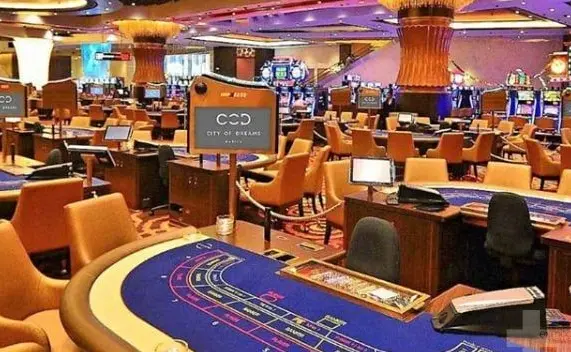
Lobby Wayfinding and the Teleport Anchor Problem
Here is the hardware-insider detail the marketing decks bury: teleport anchors must be placed at logical decision nodes, not scattered arbitrarily. Every anchor point is a cognitive checkpoint. Place them at the mouth of each gaming zone and you get free wayfinding. Place them randomly and players lose orientation and log out.
The lobby navigation layer is really a graph traversal problem dressed up as a comfort setting. Anchor density under twelve per zone produces dead zones where players feel stranded. Density over forty creates anchor clutter that reads as visual noise and slows decision latency by a measurable margin. The sweet spot sits between eighteen and twenty-six anchors per gaming zone, and I have watched labs burn six figures discovering that number the hard way. 🎰
One more thing the smooth-locomotion purists never account for: collision geometry. Smooth movement through a crowded virtual sportsbook forces continuous physics resolution against other avatars, and frame-time spikes in those moments are nausea multipliers. Teleport sidesteps the whole problem by making movement discrete and cheap to render.
Latency Budgets That Decide the Winner
Neither system survives a bad render pipeline. Smooth locomotion demands a locked ninety frames per second minimum with sub-twenty-millisecond motion-to-photon latency, and any lab that cannot guarantee that headroom should not offer smooth at all. Teleport tolerates frame drops far more gracefully because there is no continuous optical flow to betray the vestibular system.
That single fact explains why the majority of licensed USA virtual reality casino lab builds ship teleport-first and treat smooth as an opt-in premium layer for hardware that can actually carry it. The comfort setting is downstream of the silicon, always.