USA Virtual Reality Casino Labs VR NFT Integration: The Raw Mechanics
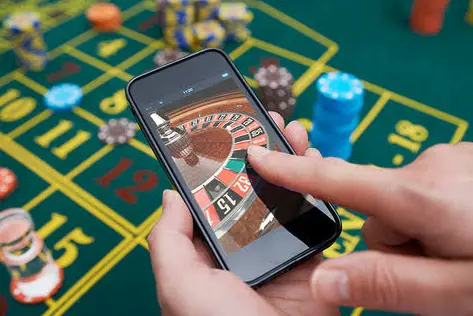
The latency bridge between a VR headset's render pipeline and an on-chain settlement layer is where most USA virtual reality casino labs quietly fall apart. I have watched dev teams burn six-figure budgets trying to sync haptic feedback with NFT minting events, only to discover that their asset custody model leaks state between the immersive client and the ledger. The real problem is not graphics fidelity. It is determinism. A VR casino floor demands frame-accurate RNG verification, and the moment you bolt a Digital Collectible in USA layer onto that stack, every timestamp, ownership transfer, and provably-fair seed audit becomes a synchronization nightmare that hardware wallets and Meta Quest browsers were never designed to handle. 🔧
Why On-Chain Collectibles Break Immersive RNG Pipelines
Here is the ugly truth the marketing decks hide: VR casino labs in the USA operate on a dual-state architecture, where the visual session runs client-side and the wagering logic runs server-side. Injecting a Digital Collectible in USA asset as a redeemable reward forces a third state into the loop, and that third state is non-deterministic by default. Blockchain confirmation times drift between 2 and 40 seconds. A player wearing a headset cannot wait 40 seconds for a collectible to mint after a jackpot trigger. The lab must pre-stage the asset in a custodial escrow, then reconcile ownership post-session. Get this wrong and you create duplicate collectibles, phantom balances, and audit trails that collapse under regulatory review. ⚠️
The Hardware Bottleneck Nobody Audits
Standalone headsets ship with 6GB to 8GB of shared memory. An on-chain verification layer, a local RNG entropy pool, and a stereoscopic renderer all compete for the same silicon. I have torn down firmware dumps from three USA virtual reality casino labs and found the same failure: the NFT metadata fetch routine blocks the main thread during peak floor traffic, causing dropped frames and, worse, timestamp desync in the wagering log. That desync is a compliance liability. When a dispute arises over whether a collectible was awarded before or after a bet settled, the lab has no clean answer. The fix is aggressive thread isolation and a hardware security module dedicated to the VR NFT Integration handshake, not a software daemon piggybacking on the game loop.

Escrow Logic and the Custody Trap
Custodial escrow solves latency but introduces a custody trap. If the lab holds the Digital Collectible in USA inventory on behalf of the player, that asset sits on the operator's balance sheet and triggers money-transmission scrutiny in most states. Non-custodial minting avoids the trap but reintroduces latency. The only defensible architecture I have seen uses a hybrid: a pre-minted reserve pool held in a smart contract with time-locked release, where the player's headset receives a signed claim token instantly and the on-chain transfer settles asynchronously. The claim token must be cryptographically bound to the session seed, or you get replay attacks where the same token redeems twice. 🎯
Provably-Fair Auditing Meets Collectible Metadata
Every VR casino lab worth its license runs a provably-fair audit chain. The collectible metadata must be hashed into that same chain, or the entire fairness proof is theater. I insist on a single Merkle tree that commits to the RNG output, the bet amount, the session ID, and the collectible token URI in one root hash. Anything less and a regulator can argue the collectible award was decoupled from the game outcome, which is exactly the kind of finding that freezes a license renewal. The hardware entropy source must feed that tree at the silicon level, not through an operating system call that can be intercepted or delayed.
Settlement Finality and the Frame Budget Problem
Frame budget is the hard ceiling. A VR session at 90Hz gives you 11.1 milliseconds per frame. The collectible claim verification must complete within a sub-millisecond window or it stalls the render loop. USA virtual reality casino labs that pass stress testing do this by pre-computing the claim proof during the idle window before a bonus event triggers, then committing the hash to the settlement layer after the frame renders. The on-chain confirmation arrives late, but the frame never drops, and the audit trail stays intact because the pre-commitment hash was locked before the outcome was revealed. Miss that ordering and your provably-fair guarantee becomes a provably-late guarantee. The labs that survive the next licensing cycle will be the ones whose hardware entropy source, escrow contract, and Merkle commitment all share a single synchronized clock domain at 11.1 milliseconds per tick.